There is no single answer that fits every home. In Victoria, landlords must have rental properties checked every two years. For owner-occupied homes, the sources reviewed for this article don’t set a fixed legal interval, but safety authorities consistently recommend having wiring checked by a licensed electrician, especially in older homes.
This guide separates what is required from what is recommended, and lists the situations where you shouldn’t wait for the next scheduled check.
The short answer
- Rental properties in Victoria: every two years, by a licensed electrician. This is a legal requirement for rental providers.
- Owner-occupied homes: no fixed interval was found in the Australian regulator sources reviewed. A sensible guideline is a professional check every few years, and sooner if the home is older, has been renovated, or shows warning signs. [CONFIRM: Beattie Electrical’s preferred recommended interval, e.g. every 5 years, so the article reflects the business’s actual advice.]
- Safety switches: a quick push-button test several times a year, which you can do yourself (details below).
- Any home: inspect when something changes, such as buying the property, a storm or flood, or recurring tripping.
What is a home electrical inspection?
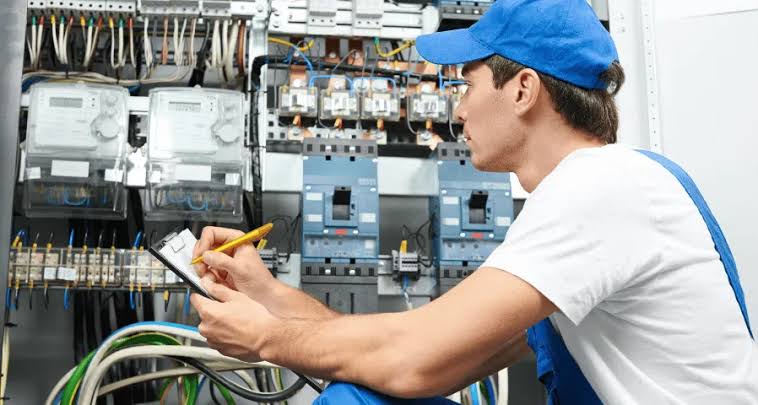
An electrical inspection (often called an electrical safety check) is a licensed electrician’s assessment of your home’s electrical installation: the switchboard, wiring, power points, lighting and safety devices. The aim is to find faults, wear and missing protection before they cause a shock or fire.
In Victoria, Consumer Affairs Victoria describes the rental check as covering all electrical installations, fixtures and fittings. Energy Safe Victoria notes that an electrical safety check is different from a Certificate of Electrical Safety, which is issued when electrical work is actually carried out.
What the rules say
Requirements differ by state and territory, so check your own jurisdiction. This article has verified Victoria, Queensland and NSW guidance only.
Victoria: rental properties
Rental providers must have electrical installations and fittings checked by a licensed or registered electrician every two years. Energy Safe Victoria describes the scope as electrical switchboards, wiring and fittings. If no check has been done in the previous two years when a renter moves in, one must be arranged as soon as practicable. Providers must also keep a record of the latest check and give details of it to renters. Consumer Affairs Victoria states this now applies to all rental agreements, whether they started before or after the recent changes.
Smoke alarms are separate: Victorian rental providers must also have them checked at least once every year.
Owner-occupied homes
The regulator pages reviewed do not set a periodic inspection requirement for owner-occupiers. They do make the safety case clearly. NSW Government guidance says the only way to be sure old wiring isn’t a risk is to have a qualified electrician inspect it, and notes that around 40% of NSW house fires are caused by electrical faults and appliances. Energy Safe Victoria’s tenancy guidance is aimed at rental providers, but RACV notes that safety checks also suit owner-occupied homes, especially after moving into a new property or when the condition of the wiring is unknown.
Other states and territories
We haven’t verified inspection rules for other states and territories, so don’t assume the Victorian two-year rule applies elsewhere. Ask a licensed electrician or your state regulator.
When to book an inspection, regardless of the calendar
A fixed schedule only works if nothing changes between checks. These events should prompt an inspection sooner:
- You’re buying or have just bought a home. You often can’t tell the condition of wiring from the surface.
- The home is older. NSW guidance explains that older wiring commonly used a rubber coating that can deteriorate over time, leaving conductors exposed. Don’t touch it, and don’t investigate it yourself.
- Circuits trip repeatedly. Queensland’s Electrical Safety Office says a safety switch or breaker that trips regularly can indicate faulty equipment or improper use.
- Your switchboard still has rewireable fuses, or you’re unsure whether every circuit has a safety switch.
- You’re renovating or adding load, such as an extension, a new oven, solar or an EV charger.
- After a storm, flood, fire, or roof or insulation work that may have disturbed wiring.
- A product recall affects your home. For example, NSW Fair Trading recalled Infinity-brand cable used in some work between 2010 and 2013. Anyone concerned should ask a licensed electrician to check rather than inspecting wiring themselves.
Warning signs that shouldn’t wait
These are things you can safely notice without opening anything:
- Burning smells, scorch marks or discolouration around power points or switches
- Buzzing or crackling from walls or the switchboard
- Flickering or dimming lights
- Power points or switches that are warm, cracked or loose
- Breakers or safety switches that trip repeatedly
- Frayed or damaged leads
If you notice any of these, stop using the affected circuit or appliance and call a licensed electrician. If you smell burning or see smoke or flames, treat it as an emergency and call 000. Never open a switchboard, power point or ceiling space to investigate.
Safety switch testing: a different job, a different schedule
A safety switch (also called an RCD) is designed to cut power quickly when it detects a current leak, such as through a person. Unlike a circuit breaker, it has a Test or T button.
Testing it is one of the few electrical checks regulators actively encourage householders to do:
- Queensland’s Electrical Safety Office recommends testing with the button every three months.
- NSW Fair Trading also advises every three months.
- Energy Safe Victoria’s campaign encourages households to test at least annually.
A practical approach is to follow the more frequent schedule. Tell everyone at home first, since power to the protected circuits will cut out, then press the button once. If the switch trips, it’s working, and you can switch it back on. If it doesn’t trip, or you can’t find a test button at all, call a licensed electrician.
A push-button test only confirms the device trips. It doesn’t replace a professional inspection, and Queensland’s guidance is explicit that safety switches shouldn’t substitute for electrical maintenance.
What does a licensed electrician check?
The scope varies with the job, but a residential inspection typically looks at:
- The switchboard: condition, labelling, signs of overheating, and whether safety switches and breakers are present and working
- Wiring: type, age, visible condition where accessible, and evidence of unsafe modifications
- Power points and switches: damage, loose fittings and overload signs
- Lighting and fittings
- Smoke alarm presence and operation, where included in the scope
Ask what the inspection includes before booking, and request a written record. In Victoria, a rental check record must show the electrician’s name and licence or registration number and the date of the check. If repairs are needed, the work should be done by a licensed electrician, who will issue the relevant compliance certificate for the work in your state (for example a Certificate of Electrical Safety in Victoria or a Certificate of Compliance for Electrical Work in NSW).
What does an inspection cost?
Costs depend on the size of the home, the number of circuits, access and the scope of testing, so we haven’t quoted a figure. [CONFIRM: add a Beattie Electrical price guide or call-out and inspection fee range only if the business wants to publish one.] Any repairs found during the check are quoted separately.
A simple schedule to follow
What | Suggested frequency | Who does it |
Safety switch push-button test | Every 3 months (Vic regulator suggests at least yearly) | You |
Look over visible leads, power points, switches | Occasionally, and whenever you notice something | You (observation only) |
Smoke alarm test | Per manufacturer; Victorian rental providers must check at least yearly | You or a licensed electrician |
Full inspection, rental property in Vic | Every 2 years (legal requirement) | Licensed electrician |
Full inspection, owner-occupied home | Every few years, sooner for older homes or after changes [CONFIRM interval] | Licensed electrician |
Inspection after a trigger event | As soon as practical | Licensed electrician |
Next step
If you can’t remember when your wiring was last checked, you’ve bought an older home, or a circuit keeps tripping, an inspection is a sensible place to start. A licensed electrician can tell you what condition the installation is in and what, if anything, needs attention. Property managers and landlords can also use the check to keep compliant records.
Frequently Asked Questions
Is a home electrical inspection compulsory?
How often should I test my safety switches?
Should I get an inspection before buying a house?
How do I know whether my electrician is licensed?
Can I check the wiring myself?
Does an inspection include smoke alarms?

admin
Beattie Electrical — trusted Sydney electricians.