If you run a business, you are responsible for more than keeping the power on. Under Australian work health and safety laws, you must manage electrical risks to your workers, customers and visitors, and that applies whether you own the premises or lease them.
This guide explains what that looks like in practice, what you can safely do yourself, and when a licensed electrician needs to be involved.
Who is responsible?
Duties sit with several people, not just the business itself:
- The business (PCBU): holds the primary duty to keep the workplace safe so far as is reasonably practicable.
- Officers: owners, directors and senior managers must exercise due diligence to make sure the business meets its duties. For small businesses, the officer is usually the owner or operator.
- Workers: must take reasonable care for their own safety and that of others, and follow reasonable instructions.
What about leased premises? Safe Work Australia states that the duty to make sure electrical equipment is safe applies to all PCBUs, even if they didn’t own or supply the equipment. In practice, a landlord may be responsible for the building’s fixed installation, while a tenant is responsible for equipment it brings in and how the space is used. Both can hold duties, so check your lease and ask your regulator or a licensed electrician where it isn’t clear.
The core electrical responsibilities, explained
1. Keep equipment safe, and take unsafe equipment out of service
If a power tool, cord, appliance or power board is damaged, don’t keep using it. Disconnect it from the power, label it so no one uses it, and arrange for a competent person to repair or test it before it returns to service.
2. Inspect and test where the environment demands it
Some workplaces are classed as higher risk because conditions are likely to damage equipment or shorten its life, for example wet, dusty, outdoor or corrosive environments. Under the model WHS Regulations, equipment that is plugged into a socket outlet and used in those environments must be regularly inspected and tested by a competent person.
Safe Work Australia notes that equipment in higher-risk workplaces usually needs testing at least once every 12 months, and refers to AS/NZS 3760 for in-service testing. The competent person decides the right frequency for your equipment and conditions. Lower-risk workplaces such as many offices aren’t required to test on a fixed schedule, but regular checks may still be sensible.
Competent person: the model WHS laws don’t set specific qualifications, but this is usually a licensed or registered electrician or a licensed electrical inspector. Your state or territory regulator has the detail.
3. Use safety switches (RCDs) and have them tested
A residual current device, commonly called a safety switch, detects harmful electrical leakage and cuts power quickly. The model WHS Regulations require RCDs to protect workers using portable equipment in higher-risk workplaces. Safe Work Australia also says RCDs, both fixed and portable, must be regularly tested by a competent person.
A safety switch is not a substitute for good maintenance. It reduces the risk of a serious shock, but it won’t fix overloaded circuits or damaged wiring.
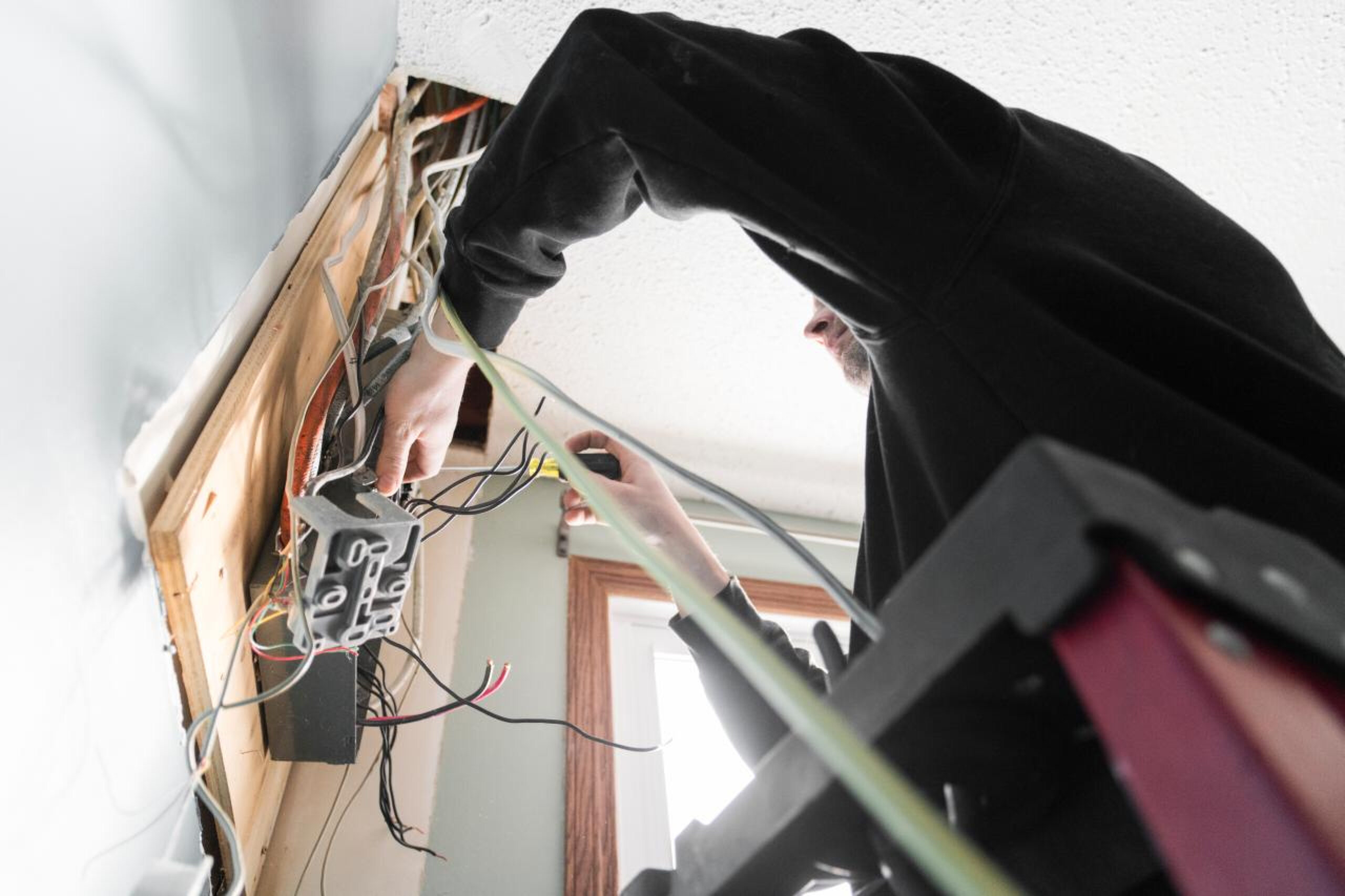
4. Use licensed electricians for electrical work
Electrical work must be carried out by appropriately licensed people. Queensland’s laws, for instance, include specific obligations on businesses about ensuring electrical work is done by appropriately licensed workers. Even in states where the wording differs, the principle is the same: fixing, altering or adding to wiring is not a job for a handyman or an employee without the right licence.
5. Keep records
Records show you’ve taken reasonable steps. Keep:
- Test and tag results and dates
- RCD test results
- Electrical inspection reports and certificates of compliance for installation work
- Details of equipment removed from service and why
- Notes on incidents, near misses and follow-up actions
6. Know your incident reporting duties
Serious electrical incidents may need to be notified to your workplace safety regulator and, in some states, the electrical safety regulator. The rules and timeframes vary, so find out who to contact before an incident happens. In Victoria, for example, WorkSafe has specific notification duties and requires written notification within 48 hours for certain incidents.
Warning signs to act on
You don’t need a licence to notice a problem. Treat these as prompts to stop using the equipment or area and call a licensed electrician:
- Circuit breakers or safety switches tripping repeatedly
- A burning smell or scorch marks on power points, plugs or the switchboard
- Buzzing, crackling or humming from outlets or the switchboard
- Flickering or dimming lights that aren’t explained by a failing globe
- Power points or plugs that feel hot
- Damaged cords, exposed wires or cracked fittings
- Power boards that are overloaded or “daisy-chained”
- Signs of water entering switchboards, light fittings or outlets
If you notice smoke, a burning smell that gets stronger or visible flames, evacuate and call emergency services on 000.
What you can safely do yourself, and what you can’t
Safe for a business owner or staff member to do:
- Visually check plugs, leads and power boards for obvious damage, then stop using anything damaged
- Press the test button on a safety switch, following the manufacturer’s instructions (a licensed electrician can show you how and how often)
- Keep switchboards clear, accessible and free of storage
- Avoid overloading power boards and using extension leads as permanent wiring
- Report faults promptly and keep records
Leave to a licensed electrician:
- Opening switchboards or equipment
- Repairing, replacing or adding wiring, circuits or power points
- Replacing circuit breakers or safety switches
- Anything involving exposed conductors, burning smells or heat damage
- Bypassing or resetting a safety device that keeps tripping
Never try to bypass a safety device. A repeatedly tripping breaker or safety switch is telling you something is wrong.
What a licensed electrician typically checks
The scope depends on your premises and what you ask for, but a commercial safety inspection commonly covers:
- Switchboard condition, labelling and signs of overheating or damage
- Visual condition of wiring, power points, switches and fittings
- Safety switch operation
- Testing of portable equipment where required
- Whether the installation suits current demand, for example after a fit-out or added equipment
- Emergency and exit lighting, where fitted. Requirements depend on building type and jurisdiction, so confirm with your building owner, certifier or electrician [verify before publishing any standard references]
Afterwards you should receive a written record of what was checked, any faults found and recommended next steps.
Common mistakes
- Assuming the landlord looks after everything. Duties can overlap. Equipment you bring in is typically yours to manage.
- Treating test and tag as a one-off. It’s an ongoing process, and the interval depends on the environment and equipment type.
- Keeping damaged equipment “just until Friday”. Unsafe equipment should be out of service immediately.
- Relying on a safety switch alone. It protects against some risks, not all.
- Skipping records. Without records, it’s harder to show you’ve met your duties.
- Waiting for a failure. Preventative checks cost less than downtime and emergency callouts, but costs vary by premises, so ask for a written quote.
Factors that affect inspection and testing costs
Costs vary, so no honest single figure applies to every business. Common factors are:
- Number and type of items to be tested
- Size and complexity of the switchboard and installation
- Access, for example ceiling spaces or multiple floors
- Whether work can be done during business hours
- Faults found and any repairs required
Frequently Asked Questions
Is test and tag mandatory for every business?
How often should electrical equipment be tested?
Who can inspect and test my electrical equipment?
Do I need safety switches in my business?
Is the landlord or the tenant responsible for electrical safety?
Can I replace a power point or light switch myself to save money?

admin
Beattie Electrical — trusted Sydney electricians.