
Induction Cooktop Installation in Sydney
Beattie Electrical installs induction cooktops for homeowners, renovators, landlords and apartment owners across Sydney. We look at what your kitchen already has, tell you plainly what needs to change, then connect and test the cooktop so it runs safely from the first meal. Call [phone number] or send us the model details for a straightforward quote.
Is Your Kitchen Ready? The Pre-Install Check
| Check | What We Look At | Why It Matters |
|---|---|---|
| Existing cooktop connection | Whether there is a cooktop circuit already, what it is rated for, and the condition of the cable and connection point. | An old electric cooktop circuit is not automatically suitable for a new induction model. Ratings and connection types differ. |
| Switchboard capacity | Free space for a new circuit breaker, the type of protection fitted, and the general condition of the board. | A crowded or outdated board can turn a simple job into one that needs board work first. |
| Cable route | How a new cable would travel from the board to the kitchen: roof space, subfloor, wall cavity or slab. | Access is a major factor in how long the job takes and what it involves. |
| Benchtop cut-out | Cut-out size, corner radius, bench thickness and the clearance required underneath. | Electrical work cannot fix a hole that is the wrong size. Stone or cabinetry changes need the right trade. |
| Space beneath the cooktop | Drawer depth, an oven below, ventilation gaps and where the connection box can sit. | Many cooktops need a minimum clearance and airflow underneath to cool their electronics. |
| Cooktop model details | Model number, rated power, supply requirements and the installation manual. | These set the circuit specification, so we need them before we can give a firm scope. |
Replacing an Existing Electric Cooktop
Swapping a ceramic or older electric cooktop for induction looks like a like-for-like job, but it often is not. Induction models can draw their power differently, and the connection point under the bench may have been set up for something with a different rating or a different layout.
On a replacement job we isolate the old cooktop, inspect the existing cable and connection, and confirm whether it suits the new model. If it does, we connect and test. If it does not, we will explain what needs to change and why, whether that is a new cable, an updated circuit breaker or a different connection arrangement.
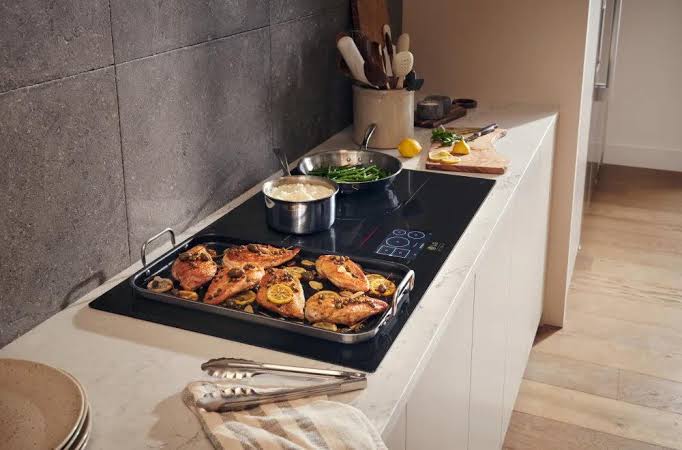
Switching From Gas to Induction
| Part of the Job | Who Handles It | Notes |
|---|---|---|
| New dedicated circuit, isolating switch and cooktop connection | Beattie Electrical (licensed electrician) | We assess the supply, run the circuit, connect the cooktop and test it. |
| Disconnecting and capping the gas supply | A licensed gasfitter | Gas work must be done by a licensed gasfitter. We can work around their schedule so the kitchen is not out of action longer than necessary. |
| Altering the benchtop cut-out | Stonemason, cabinetmaker or builder | Gas cooktops and induction cooktops rarely share identical cut-outs, so measure before you order. |
| Rangehood and ventilation | Electrician, plus builder if ducting changes | Your rangehood may be fine as it is, or it may be due for an update. |
| Factor | Replacing Electric | Switching From Gas | New Kitchen Build |
|---|---|---|---|
| Typical electrical scope | Check and reuse the existing circuit, or upgrade it | New dedicated circuit and isolating switch | Circuit designed in from the start |
| Other trades involved | Rarely | Gasfitter, benchtop installer | Builder, cabinetmaker, plumber |
| Switchboard check | Recommended | Almost always needed | Part of the kitchen design |
| Main risk | Assuming the old circuit suits | Trades out of sequence | Cooktop chosen after wiring is done |
| Best time to call us | Before ordering | Before ordering and before gas is capped | At rough-in stage |
Because it is a multi-trade job, we recommend sequencing it properly: confirm the cooktop model and cut-out first, book the gasfitter and benchtop work around the delivery date, and have us connect the cooktop once the space is ready. We will tell you plainly which parts are ours and which are not, so nothing is left assuming someone else was going to do it.
When the Switchboard Is the Sticking Point
Sometimes the cooktop is the easy part. Older switchboards, especially those with ceramic fuses, limited spare capacity or no modern safety switch protection, may not be able to take another circuit safely.
If that is the case in your home, we will show you what we found and explain the options. Where a switchboard upgrade is genuinely needed, we can combine it with the cooktop installation to avoid a second visit. Where it is not needed, we will tell you that too. Have a look at our [switchboard upgrades page] for more on how that process works.
What Happens on Installation Day
We confirm the cooktop model, the agreed scope and the position of the isolating switch with you before we start.
We make the existing circuit safe, protect your floors and benchtop, and clear the work area.
If a new circuit is required, we run the cable, install the circuit breaker and RCD protection, and mount the isolating switch.
The cooktop is seated in the cut-out and connected as set out in the manufacturer's instructions.
We test the circuit, the protection devices and the cooktop itself, and check that every zone powers up correctly.
We issue the compliance paperwork, show you where the isolating switch is, and clean up before we leave.
Compliance and Paperwork in NSW
Connecting a fixed appliance to a new or altered circuit is regulated electrical work. In NSW, that means it must be carried out by a licensed electrician, to the requirements of AS/NZS 3000, and a Certificate of Compliance for Electrical Work (CCEW) is issued when the job is complete.
Keep that certificate with your property records. It can be requested by insurers, property managers or buyers' conveyancers, and it is your proof that the work was done properly. Our installations are covered by [workmanship warranty wording to be confirmed].
Not sure what's causing the issue?
We'll inspect, diagnose, and get your fan running safely and efficiently.
Common Problems We See With Cooktop Installations
Circuit trips as soon as several zones run.
Usually a sign the cooktop is sharing a circuit it was never meant to share.
Cooktop ordered before the cut-out was measured.
The tile or stone is already cut and the new unit will not drop in.
Cable that suits an old appliance but not the new one.
It worked for years with the previous cooktop, but the new rating asks more of it.
Isolating switch in an awkward spot.
Behind the appliance or in a cabinet you cannot easily reach is not where it belongs.
Poor ventilation beneath the cooktop.
A drawer or oven packed in too tightly can cause the electronics to overheat and shut down.
DIY connection by an unlicensed person.
It is illegal, may void the appliance warranty, and can leave you uninsured if something goes wrong.