Beattie Electrical's licensed electricians install electric ovens across Sydney: built-in wall ovens, double ovens, freestanding cookers and under-bench units. We look at the circuit behind the oven as closely as the oven itself, because that is where most installation problems start.
| Oven Type | Typical Connection | What We Check |
|---|---|---|
| Single built-in wall oven | Plug-in or hardwired, depending on the model | Rating plate, outlet position in the neighbouring cabinet, cavity size and ventilation gaps |
| Double wall oven or combi / steam oven | Usually hardwired on its own circuit | Circuit capacity, cable size, breaker rating, safety switch protection |
| Freestanding electric cooker | Hardwired on a cooker circuit via an isolating switch or connection unit | Existing cooker point, anti-tip bracket, clearances to walls and benchtops |
| Under-bench oven with a separate cooktop | Oven and cooktop often on separate connections | Combined load, whether they share a circuit, access to isolators |
| Pyrolytic (self-cleaning) oven | As per model; often higher load | Circuit suitability, cabinet heat tolerance, ventilation |
You are replacing a gas oven, or an old cooker that was set up differently.
The existing cooker outlet or isolating switch is cracked, discoloured or warm to the touch.
Your switchboard still has ceramic fuses or no safety switch.
The renovation is moving the oven to a new position, such as a tower or island.
The old oven regularly tripped the power.
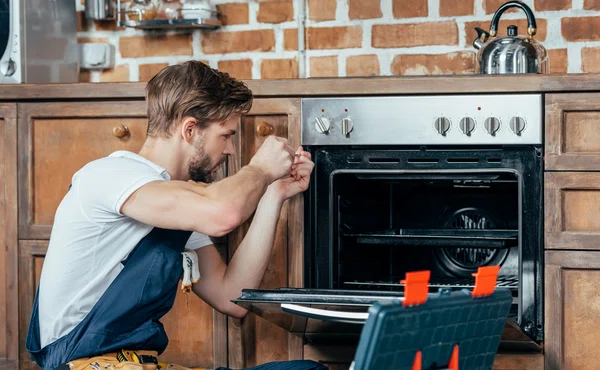
In established areas like Randwick and Leichhardt, an oven upgrade can mean original wiring, an old cooker circuit and a switchboard that still relies on fuses. It is often the sensible moment to look at the whole picture, including whether a switchboard upgrade belongs on the list.
In apartment blocks around Chatswood and Parramatta, strata by-laws may set work hours or require approval for kitchen works, cabinet depth is tight and cable routes are limited by the building. Check your by-laws and let us know early so access and timing are sorted.
For kitchen renovations in places like Manly and Castle Hill, the best time to plan the oven circuit is before the cabinets go in. Tower ovens and island benches move connection points, and shifting a cable after the joinery is fitted is awkward. We work around your builder and joiner.
We check the oven's electrical rating and installation instructions before we arrive, so we turn up with the right parts.
Power to the circuit is switched off and tested before anything is touched.
We look at the cable, connection point, circuit breaker and safety switch protection, and flag anything that is not up to the job.
If you have arranged it, we disconnect and make safe the old appliance and take it out of the cavity.
The oven is wired or plugged in as the manufacturer specifies, with a new isolating switch or connection unit where one is needed, then fixed in place.
We check the safety switch operates, then run the oven up to temperature to confirm it works and the connections stay cool.
We show you the controls and the isolator, and provide compliance paperwork where it applies.
In NSW, wiring work, including hardwiring an oven to a circuit, must be done by a licensed electrician.
The installation needs to meet AS/NZS 3000, which covers cable selection, isolation and circuit protection.
Current practice expects circuits like this to be protected by a safety switch (RCD). If your switchboard predates them, we will explain what that means for the oven circuit.
Installing outside the maker's instructions can complicate a warranty claim.
Where the work requires it, a Certificate of Compliance for Electrical Work is lodged and you receive your copy
Keep the paperwork. If you sell, renovate or make an insurance claim, it helps to be able to show who did the work and when.
This can point to a wiring fault, a damaged element or moisture in the appliance, and needs proper testing, not a reset-and-hope approach.
Sometimes the appliance, sometimes the supply. We test both before anyone blames the oven.
Usually a loose or undersized connection. Do not keep using it.
Typically a cavity or levelling problem.
Common after DIY attempts and easy to put right properly.
Worth fixing at the same visit. SAFETY FIRST If you smell burning or see scorching at the oven's connection, switch the oven off at the isolator or switchboard and call a licensed electrician. If there is smoke or fire, call 000.
Tell us the model, send a couple of photos, and we will outline the job and the factors that affect your price.